
Why Your Design Process is Gathering Dust

A simple reason most designers don’t follow their own process
Imagine giving a client a floor plan with no dimensions.
You show them the layout — kitchen here, island there, dining table here — but you don’t indicate how big the rooms are.
Immediately they start asking questions.
“How big is the kitchen?”
“How far is the island from the wall?”
“Will this table actually fit?”
A floor plan without dimensions isn’t very useful.
The same thing happens with most design processes.
Designers often describe the steps of their process, but they leave out the two things that make a plan usable:
How long things take.
And when they will happen.
Without that information, the process is just a concept.
Not something people can actually follow.
And that’s why so many design processes quietly collect dust.
 What a Real Process Needs
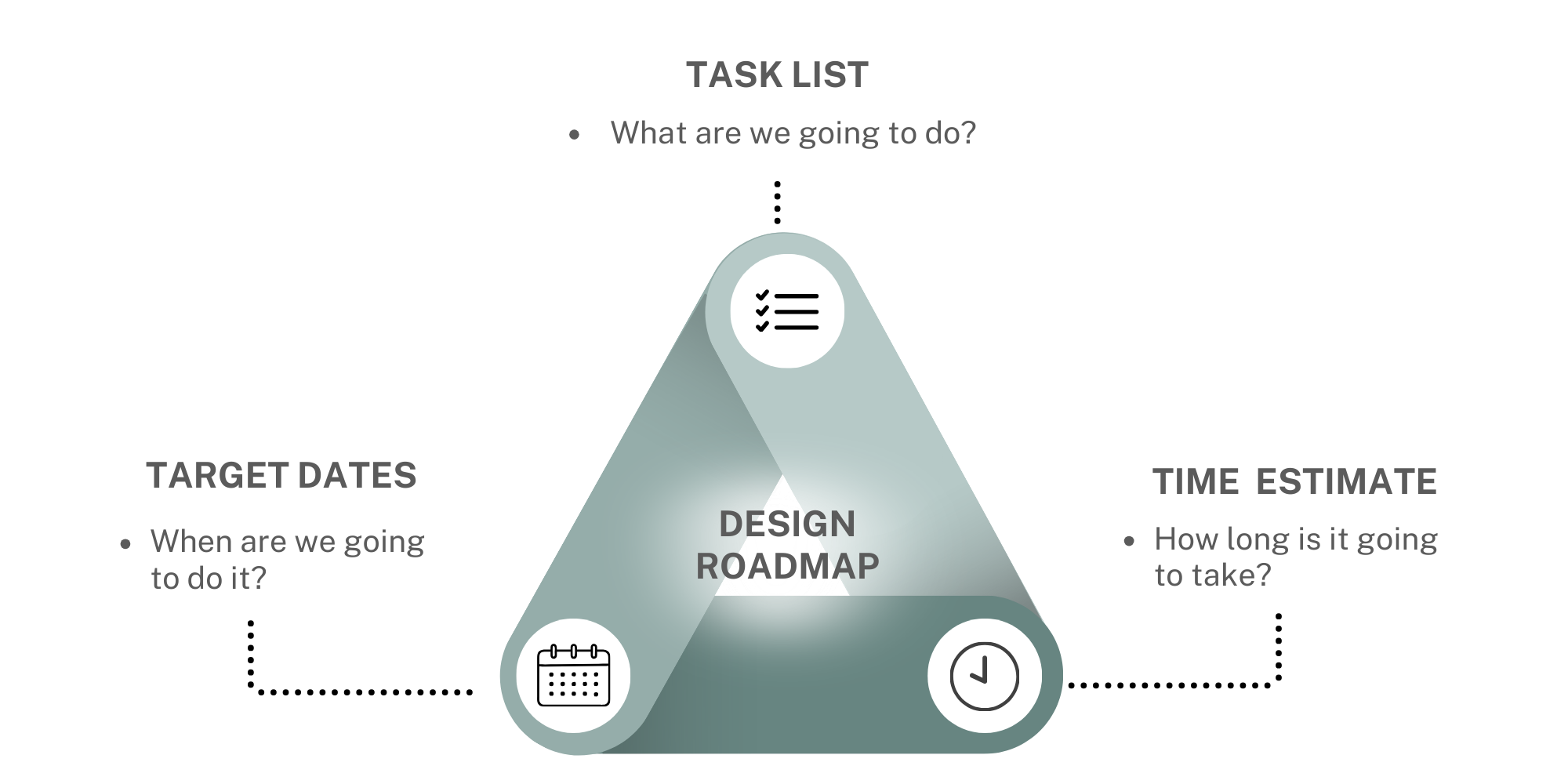
For a design process to actually guide a project, everyone involved needs to clearly understand three things:
1. WHAT is happening
2. HOW LONG it will take
3. WHEN it will happen
If even one of these elements is missing, the process breaks down.
Without them, a process is simply information — not a plan.
But when all three appear together in one clear view, something powerful happens.
Clients understand the project.
Contractors understand the project.
Your team understands the project.
And suddenly everyone is aligned around the same roadmap.
Why Most Design Processes Don’t Work
Most design processes are written from an internal office perspective.
They might include:
• internal checklists
• technical design tasks
• office procedures
• long written explanations
These things can be helpful for your team.
But they are not helpful for clients or contractors.
Clients and GCs don’t need to see every internal step you take.
What they need to see is much simpler:
The major phases of the project
and the milestones that happen within those phases.
Phases vs Milestones
These two things are often confused, but they serve very different purposes.
Phases
Phases are the big sections of a design project.
For example:
Programming
Schematic Design
Design Development
Construction Documentation
Construction Administration
Phases give everyone a high-level understanding of the structure of the project.
But phases alone aren’t enough.
Because they don’t show what actually happens week-to-week.
Milestones
Milestones exist inside each phase.
These are the specific moments when decisions are made or progress happens — usually meetings or key deliverables.
For example:
Site Measure
Schematic Design Presentation
Cabinetry Presentation
Construction Document Hand-off Meeting
Milestones give the project a clear sequence.
They show exactly how the project moves forward.
The Missing Piece: Weekly Milestones
For a process to truly work, milestones need to be organized week-by-week.
That means your meetings and decision points are clearly laid out:
• in order
• by week
• within each phase
• and placed on the calendar
Now everyone can see:
What is happening.
How long it will take.
And when it will happen.
Clients know what’s coming next.
Contractors know when decisions will be made.
You always know what you’re preparing for.
When this structure is visible, projects suddenly feel much calmer and more predictable.
It’s almost like magic.
The Power of One Simple View
When the phases, milestones, time estimates, and calendar all appear in one clear document, the project becomes easy for everyone to follow.
Clients understand the plan.
Contractors understand the plan.
Your team understands the plan.
Not because the process became more complicated.
But because it became simpler and easier to see.
The First Process I Was Ever Able to Follow
For years, I tried to create processes for my design firm.
None of them really worked.
They were too detailed.
Too complicated.
Too internal.
Then I created something much simpler.
A single document that showed:
• the phases of the project
• the milestones inside each phase
• how long each milestone would take
• and the actual calendar schedule
That document became what I now call the Design Roadmap.
And it was the first process I was ever able to follow consistently in my business.
More importantly, it was the first process my clients and contractors could follow too.
Everything they needed to understand the project was right there.
In one simple view.
The Good News: You Only Build It Once
If this sounds overwhelming, don’t worry.
The key is that you decide the structure once.
Once you build a template roadmap for your process, you simply reuse it for future projects.
Of course every project is a little different.
But those differences are small adjustments — not a complete reinvention of the process.
You’re not starting from scratch every time.
You’re starting with a clear roadmap.
I’ve created hundreds of these roadmaps over the years, and once you understand the structure, they’re surprisingly quick and easy to build.
Want to Learn How to Create One?
If you'd like to learn how to create a Design Roadmap for your own projects, I teach the full method inside my Design Roadmap System course.
Inside, I walk you step-by-step through how to build a clear, client-facing roadmap that shows:
• the phases of your design process
• the milestones within each phase
• how long each step takes
• and how to map everything onto a real calendar
Once those pieces are in place, your process stops collecting dust — and starts guiding your projects the way it was meant to.
Want more clarity (and less chaos) in your design business?
Join my mailing list for real-life insights, simple systems, and the occasional nudge back to what actually matters.
I’ll pop into your inbox from time to time—only when it’s useful.
We hate SPAM. We will never sell your information, for any reason.